 PlayBloo
1. Pick the control mode that matches your experience
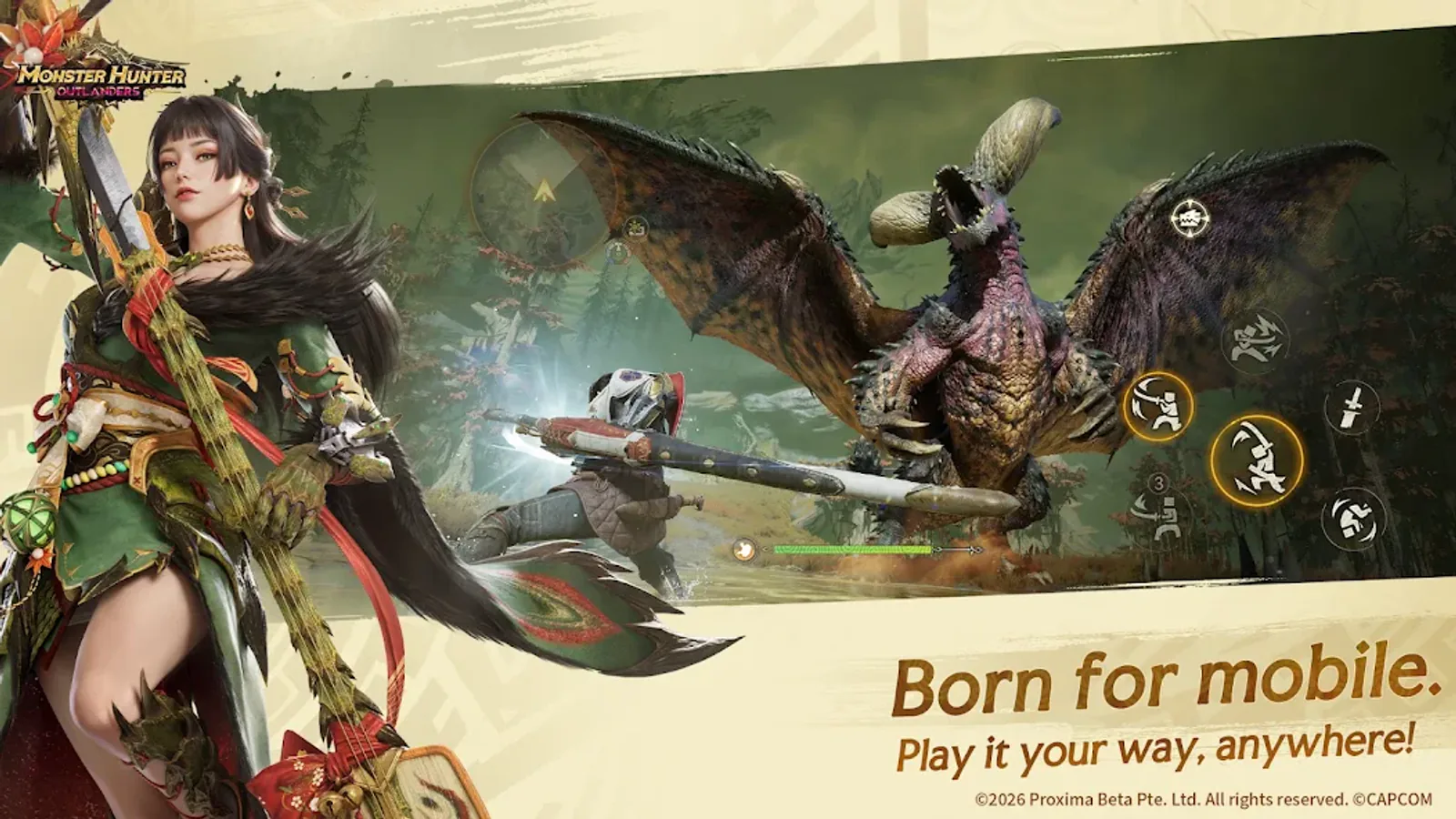
The launch announcement describes two control modes: one for players familiar with Monster Hunter and another designed to make the game approachable for newcomers. Try the newcomer option if touch controls are your biggest concern; you can judge the classic option after learning the camera and attack layout.
Before a difficult hunt, practise drawing your weapon, moving the camera, evading and returning your view to the monster. Exact gestures and button placement can change with settings, so use the labels in your own control menu rather than a beta screenshot.
2. Make your first hunt a lesson, not a speed run
This is general Monster Hunter decision-making adapted to the published Outlanders systems, not a claim that we have tested a particular monster's damage or timing in the retail build.
- Watch a complete attack before moving into range; learning the warning is more useful than guessing a combo.
- Leave room to disengage instead of spending the whole fight directly beneath the monster.
- Use a few attacks, then reposition. Do not treat a long opening as permission to ignore the next telegraph.
- Learn where healing and other supplies sit in the interface before you urgently need them.
- After the hunt, inspect the materials you earned and the equipment they unlock before starting another run.
3. Use exploration tools to prepare the next fight
Outlanders combines hunting with open-field exploration and crafting. Its official materials show traversal and field facilities alongside gathering, so treat the journey between monsters as part of your preparation rather than empty travel time.
When you reach a new area, identify a safe route back, check what can be gathered and note any traversal or defensive facility. A second trip should be more informed than the first.
4. Bring your Buddies into the learning process
The official store description names three companions: Palico, Trillan and Rutaco. Watch how your companion behaves during an easy hunt before relying on it in a harder one.
A Buddy can create space or contribute to a fight, but it does not replace learning an attack pattern. Stay aware of your own position when the monster changes targets.
5. Add other players after you understand the basics
Up to four players can hunt together. For a smoother group, agree on the target, check that everyone is ready and avoid clustering where one sweeping attack can hit the whole party.
Solo exploration remains an official option. Use it to learn a route or a weapon at your own pace, then bring that knowledge into multiplayer rather than treating co-op as a substitute for preparation.